
Synopsis
“Libertas” is a biography Croatian and Italian co-production directed by Veljko Bulajić, which follows the life and struggle of a Renaissance author and playwright Marin Držić. Set in mid-16th century, the film depicts Dubrovnik as a prosperous, but politically turbulent republic between the Ottoman Empire and the Republic of Venice. After censor Luka bans the performance of Držić’s “Dundo Maroje”, a conflict begins between freedom of expression and repressive authorities. The film was premièred at the Pula Film Festival, winning two Golden Arenas (costume design and make-up).
details
Original title: Libertas
Also known as: Libertas – La festa dei folli
Year: 2006
Country of production: Croatia
Production: 7 Hills, Tuna Film
Genre: drama, biography, history
Directed by: Veljko Bulajić
Starring: Sven Medvešek, Sandra Ceccarelli, Žarko Potočnjak, Goran Grgić, Andrea Buscemi, Achille Brugnini, Mladen Vulić
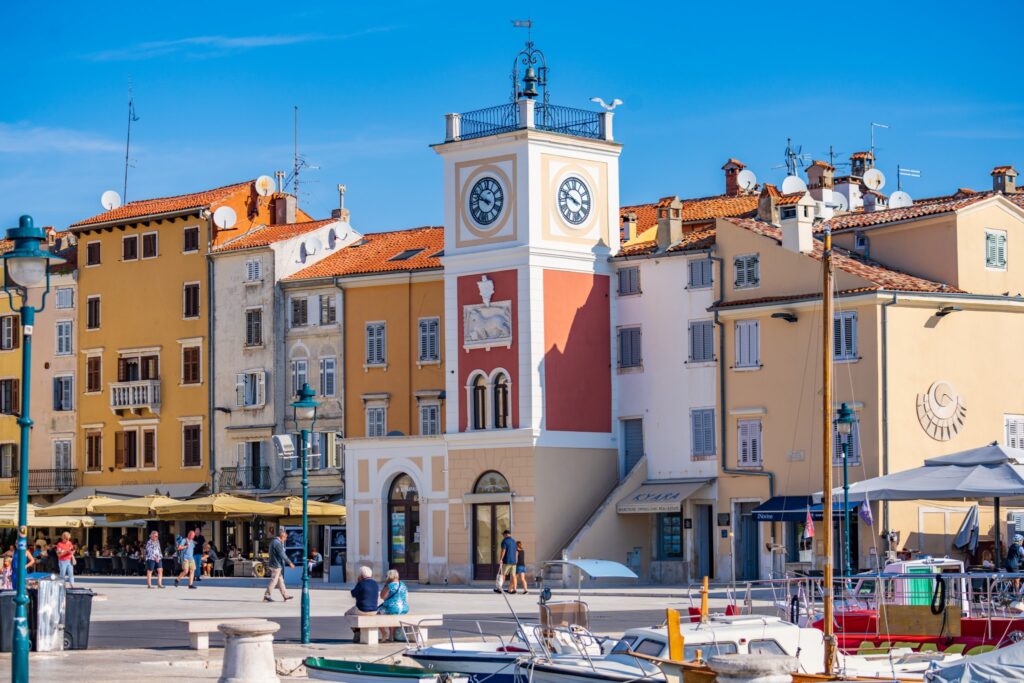
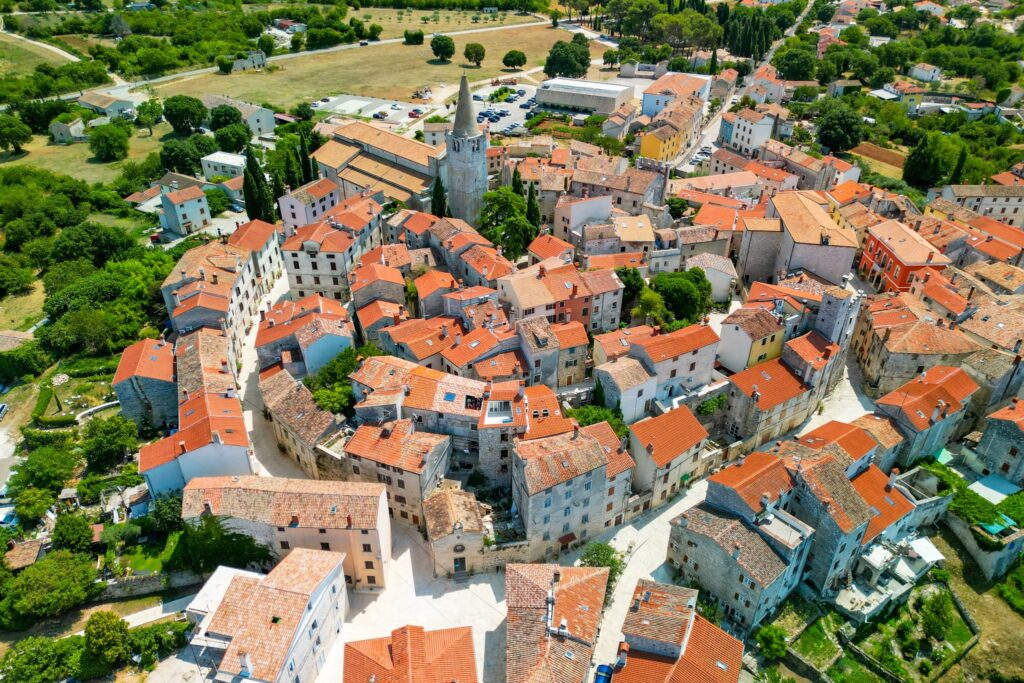
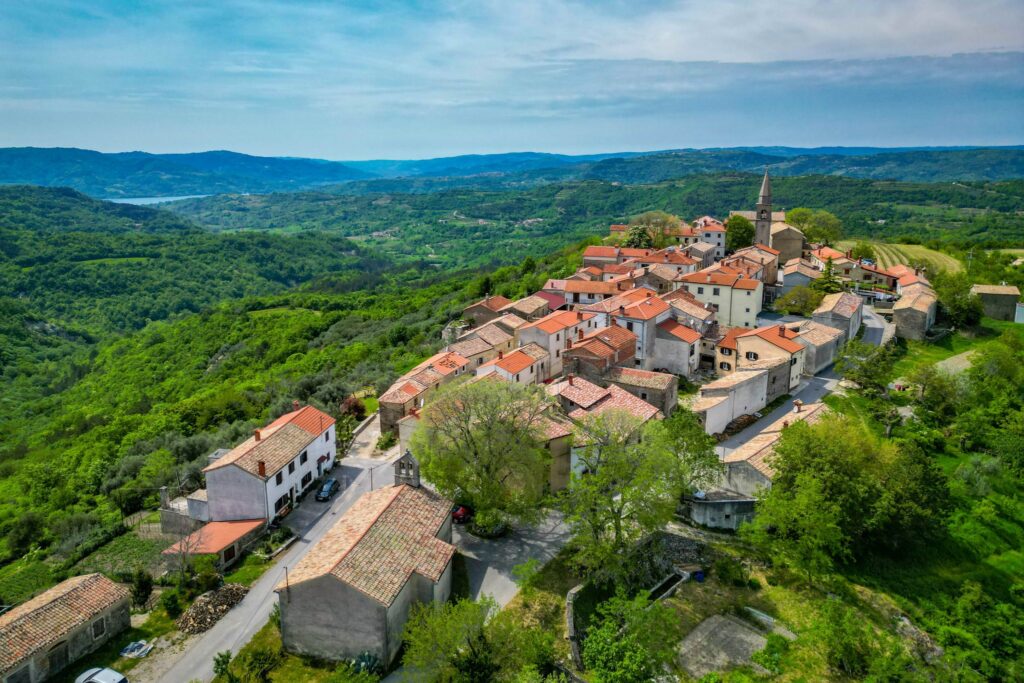
Filming locations in Istria: Bale, Draguć, Paladnjaki, Žminj, Rovinj, Vidulini
Other locations: Dubrovnik, Venice, Florence
REVIEW
LIBERTAS, directed by Veljko Bulajić, 2006
MORE FAKE THAN SERIOUS
A film of big words and even bigger men, with a great screenplay potential that tried to be another capital work by Bulajić after seventeen years of creative pause, features numerous famous Croatian actors. But it just remained heavy, with an obsolete concept for its time, a “theater” Renaissance biography work which tells the story of a Croatian playwright, comediographer and satirist Marin Držić Vidra.
Držić’s fight against censorship at the Republic of Ragusa results in his escape to Italy - first to Florence, then to Venice, where he ultimately died. “Libertas” presents itself as a political history drama with an ambition to tell the story of Držić’s freedom aspirations, but also to comment the broader political context, from the Renaissance Dubrovnik to contemporary authoritarianisms, while the title itself reveals the subject matter: the relationship between personal and political freedom and the struggle to achieve those.
Even though it tries to demolish an idealized image of the Renaissance Dubrovnik as a place of freedom, it does so without deeper analysis of the subject matter, with too many general places and characters, their relationships, as well as in the dramatic twists. The starting visual idea, i.e., the contrast between light and darkness as symbols of freedom and repression, remained dramatically underdeveloped. The character of Držić in Sven Medvešek’s under-engaged performance is reduced to a symbol of resistance, the voice of the poor (embodied through the stereotypical character of Grbavac, played excellently by Pređo Vušović) and the poet of freedom, while the political elite is portrayed as a caricature of power. The form of a costume drama in the most old-fashioned sense with too long dialogues, redundant pathos and visual solutions of predictable mannerism neither evokes emotion nor provides atmosphere. Držić, who was supposed to be a dynamic and contradictory character of protrusive intellect and prominent poetics, was reduced to a figure who proclaims sentences instead of experiencing them, while so many details are in an overcrowded dramatic function, which is repeated, thus piling up unnecessary double narration.
Known historical and biographical facts were freely modified to serve the political allegory. For example, Držić studied in Siena, not in Pisa, as depicted in the movie. The love story between him and a noble woman Deša fails both emotionally and symbolically, it was written casually, and acted without real tension. All of the above, together with a fictionalized meeting with Cosimo de’ Medici, constitute elements of romantic fiction and do not function for the purpose of in-depth character dynamics. Instead of making the story deeper in those moments, the film uses them to amplify the ideological message, which seems forced due to insufficiently powerful and under-expressed character of Držić himself.
The director’s dreamy escape into the finale with which he would like to end the film - with Marin's “new” beginning and return to Dubrovnik, which now celebrates and desires him, and in which, under his intellect, genuine kindness and powerful erudition, the power-hungry political governors fall, is like Marin’s last vision before his last breath - is extremely old-fashioned and as such a bit funny. However, in the context of this entire concept, it is actually an excellent continuation of the staged romance with Deša, whose name is mispronounced, while the characters’ spoken language is a careless mixture of Shtokavian and 16th-century Dubrovnik speech with various admixtures of surrounding dialects. All of that seems coarse, a bit clumsy and poorly integrated.
But even that dream of welcoming Marin to his Dubrovnik is quickly shattered - the reality is far darker. Držić dies in 1567, forgotten and disgraced, buried in a pauper’s grave. The film thus attempts to create a strong contrast between the artist’s inner struggle for freedom and the actual social defeat. Unfortunately, that contrast fails to function properly because the entire film has problems which culminate in its finale. “Libertas” looks and sounds as a kind of costume European drama which, at the moment when this film was made, hadn’t been shot in years, and for multiple reasons. The most important one is that this form pays much more attention to the décor, pathos and literality than to a nuanced narration and the strength of the character.
Finally, Bulajić’s free transposition of Držić’s life wants to be a political film with a vision, but it lacks boldness and stylistic coherence to carry the main presumption all the way through. The idea is excellent, clear and very important, but its realization shows us that great ambition doesn’t guarantee an equally strong result. Instead of leaving the viewer shaken by the fate of the genius of Croatian playwright, a man ahead of his time whose works have been translated into major world languages, and at the same time stunned by the question of what freedom even means in Držić’s time or when the film was made, it leaves us exhausted by a script which constantly explains, costumes which try to convey emotional weight, and a story which takes too long to find its end.