
Synopsis
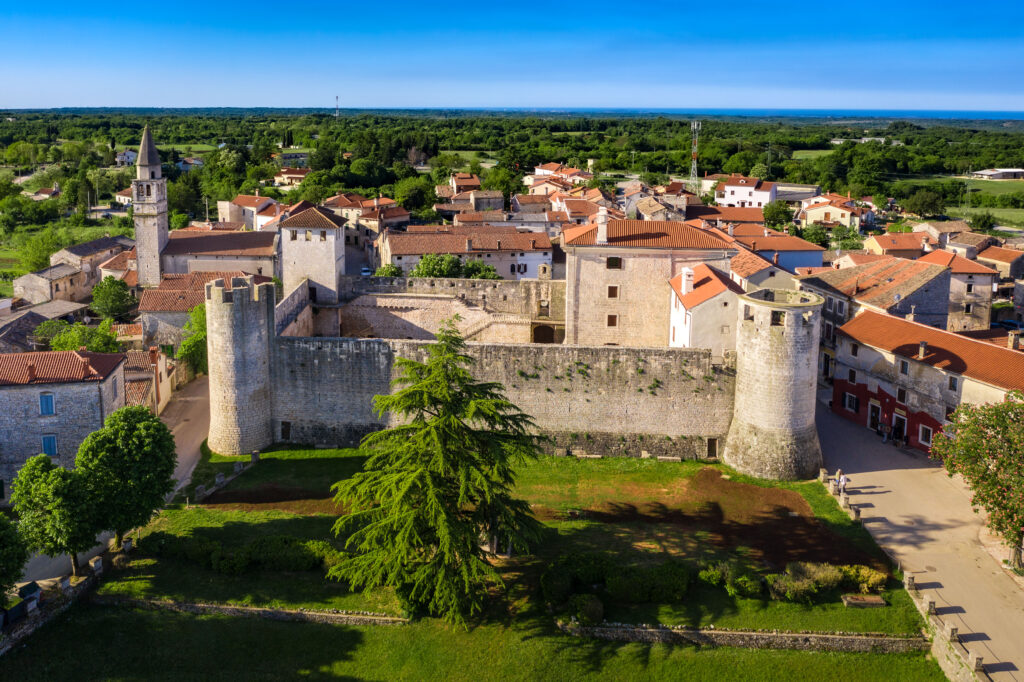
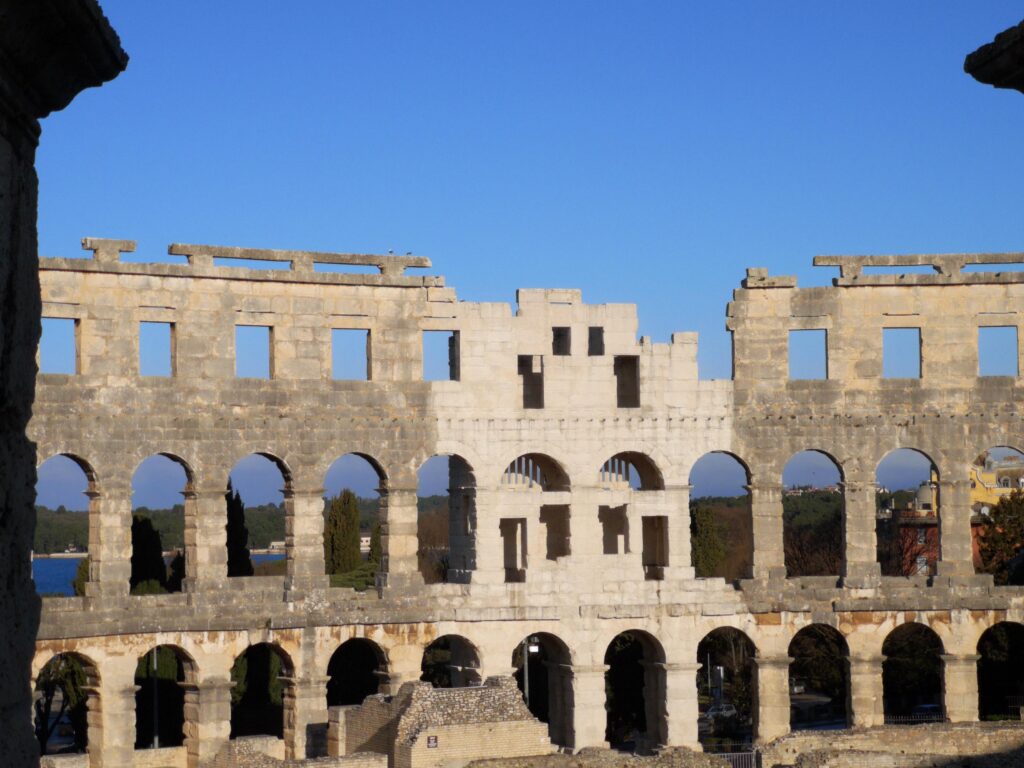
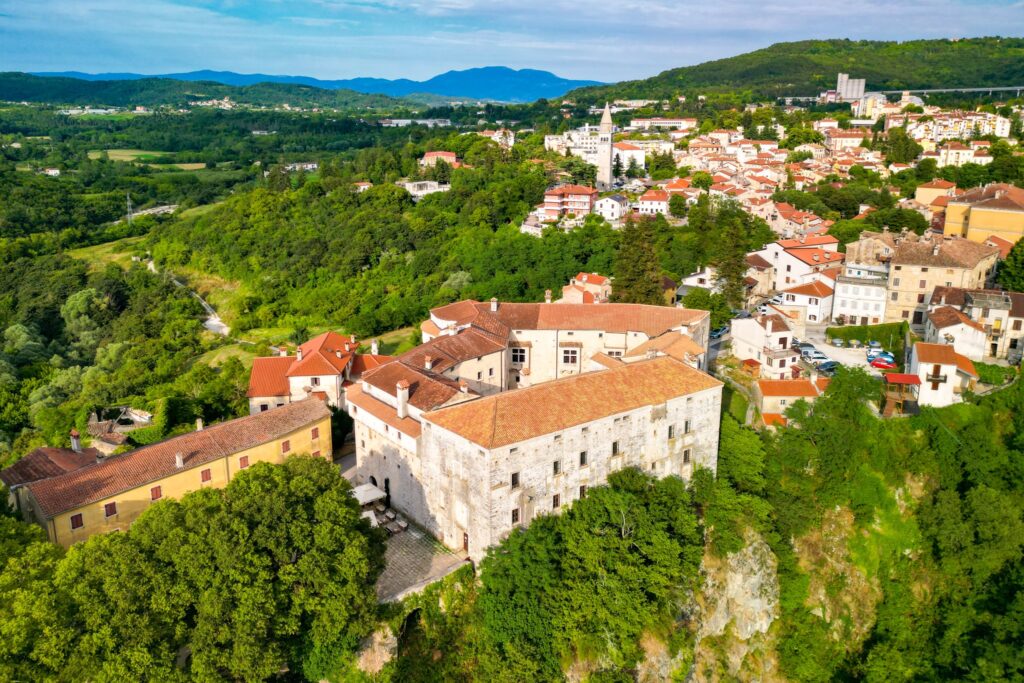
TV show “Borgia”, directed by Tom Fontana, follows the intrigues of the powerful family in Renaissance Italy. The third season, with its extravagant production, is partly filmed in Istria and Dubrovnik thanks to authentic architecture. This high-budget series brings lavish reconstructions of Renaissance Rome and the Vatican, depicting scandals from church circles in a brutal way, which caused controversy. The scenes were filmed in Pazin, Svetvinčent and Pula Arena, with around one hundred extras. This show is different from “The Borgias” by Neil Jordan.
details
Original title: Borgia – Season 3
Year: 2011 -2014
Country of production: France, Germany, the Czech Republic, Italy
Production: Film United, Pakt Media
Directed by: Tom Fontana
Starring: John Doman, Mark Ryder, Isolda Dychauk, Diarmuid Noyes
Filming locations in Istria: Beram, Pazin, Pula, Amphitheatre (Pula), Svetvinčenat
Other locations: Pag, Dubrovnik, Caprarola, Viterbo, Castell'Arquato, Piacenza, Civita Castellana, Viterbo, Gorizia, Tuscania, Viterbo
REVIEW
BORGIA – Season 3, directed by Tom Fontana, 2011-2014
VICTORY, OBLIVION AND A MATTER OF TRUTH
“Borgia” is a history TV drama created by Tom Fontana for Canal+, ZDF, ORF and Sky Italia. It follows the rise of a Spanish family Borgia and the subsequent dominance of the Papal States during the Renaissance. The third and final season, with a total of 14 episodes, is known as “Victory and Oblivion”. It was premièred in France, on Canal+ on 15 September 2014, while the final episode was aired on 27 October 2014 as the 38th episode.
The story dives deeper into the complex political landscape of the Renaissance Italy, with ambitious characters who fight for power and influence. The season focuses on Cesare Borgia, his struggles and the relationship with Leonardo da Vinci, which distinguishes it from the first two seasons in terms of content and drama. The story focuses on Cesare’s actions with an optimal mix of political intrigue, action and solid character development. Furthermore, the show is visually very sumptuous. Such dramatic development gave more significance to the supporting characters compared to previous seasons, allowing for a wider range of stories and a more detailed portrayal of motivations. With more complex twists, acting performances are stronger as well, including Isolda Dychauk as Lucrezia Borgia, Dejan Čukić as G. della Rovere, and Julian Bleach as N. Machiavelli. The third season is widely considered the best thanks to powerful characterization of Cesare, whose performance is brought by Mark Ryder with a solemn credibility. Through his terrifying and insane, sometimes even bipolar character Cesare, the show depicts psychological breakdown, but also the historical necessity of his violence and ambition.
One of the criticisms of the third season is that it is somewhat slower in pace than the previous two and that there are too many repetitive elements from earlier seasons, such as visions of the Borgia family, which actually fills up time and extends the duration of the plot. Also, the third season’s pace within the episodes falls as the episodes come to the end. It is considered the best season by some thanks to the dramaturgical emphasis on the development arc of Cesare’s character. Although the third season is the final one, the ending lacks a conclusion, leaving some parts of the story unfinished, which disappointed numerous fans.
For all episodes, as well as for the show as a whole, various controversies can be heard regarding the accuracy and consistency of historical facts, and, as is often the case, many discussions and opinions have been initiated. Furthermore, various accents spoken by the actors were gathered from different locations, which makes it hard to believe in 500-year-old drama plots which make the narrative of a contemporary structure in the digital television era.
In addition to Fontana’s show on the Borgias, from 2011 to 2013, there was also a three-season show called “The Borgias”, written by Neil Jordan, in which Jeremy Irons plays Rodrigo Borgia, who will later become Pope Alexander VI. In addition to the debates about the accuracy of historical data, Fontana’s show about the Borgia family is considered to be more lavish in terms of script and historically accurate, and John Doman’s performance as Pope Alexander VI/Rodrigo Borgia is much more authentic and faithful.
A major criticism of Fontana’s version of the show about this Valencian noble family, which produced two popes, is that it is full of nudity, sexual acts with varying numbers of participants, incest, and similar highly explicit depictions of physicality, which are exaggerated and, in a way, shift the focus away from the historical events, political and religious turmoil, wars, and conquests. But, as the Borgia family is historically often depicted as sinful and immoral, there is evidence indicating that this characterization is the result of wrong contemporary criticisms and speculations.
Still unsure about all these claims, by watching the show we can conclude that the large amount of explicit sexuality is a stylistic choice by the director and the artistic team to symbolically depict today’s view of the noble behaviour of the famous family in those times, as well as, of course, warm up the audience with an attractive image, spice up the plot and, ultimately, buy time. These elements of such a complex TV show with an extremely complex narrative should be most accurately considered in those terms, while the accuracy of historical facts or their interpretation are the subject of some other discussions.
Despite the controversies and stylistic choices, Fontana’s “Borgia” is a significant work of historical television fiction which dares to be ambitious, brutal and often subversive, making it an extremely ambitious production project. It offers a rare combination of political realism and personal tragedy of the characters, whose destiny is closely related to the historical turning points of Europe. The third season emphasises the fragility of power and the price of ambition, leaving the viewer with a question: who is actually the winner - those who survive or those who are remembered? Although it leaves an impression of incompleteness towards the end, on a symbolic level it nevertheless indeed reflects history: rarely orderly, often contradictory, and even more often - forgotten.